Dance Injuries: Causes, Patterns, Hypermobility and How Chiropractic May Help

Dancers are athletes as much as artists and the demands of classes, rehearsals and performances take a toll on the body. Dance injuries are common at every level, from the amateur and recreational dancer to the professional performer and most are soft tissue strains and joint problems that come with repeating demanding repeated movements.

The reassuring news is that the great majority are manageable and getting the right assessment early on will keep a small problem from becoming a troublesome one. I look after dancers from across Bournemouth and Poole and they ask: what exactly is this, is it serious and how do I keep dancing. This page works through the common patterns, the part hypermobility plays and where chiropractic may help.
“I am an active dancer, I rely on Bournemouth Chiropractic to keep me functioning”

“I am an active dancer and I rely on Bournemouth Chiropractic to keep me functioning fully. Leslie is an adaptable practitioner who looks, questions and analyses first before commencing treatment.”

Jane W

What are dance injuries?

Dance injuries are a distinctive group of sporting injuries and research consistently shows that most are relatively minor soft tissue problems rather than dramatic singular traumas, although the lifetime injury rates reported across dance are high and vary widely between studies.[1] They also cluster in predictable places. A systematic review and meta-analysis of ballet dancers found the foot and ankle and the lower back to be the most commonly injured regions[2] which fits in exactly with what I see in my chiropractic practice. A good deal of dance-related pain and injury can be related to a foot or ankle problem or a lower back complaint, covered in greater depth in the highlighted page links. The hip is another common site and dancers often notice a painless click or snap at the front of the hip, aptly called snapping hip, which is usually harmless and is covered on the hip and pelvic pain hub.

Why dancers get injured

Two things cause most dance injuries. The first is overuse: the same jumps, turns and positions repeated in classes and rehearsals, loading the same tissues until those body parts complain. The second is an acute injury, a bad landing or an ankle that rolls. A year-long study of a professional ballet company recorded both with overuse making up a large share and the lower limb bearing the brunt.[3] Dance also asks for movements the body does not offer freely. Turnout demands rotation, work on pointe loads the foot and ankle in an extreme position and repeated jumping asks a great deal of the calf, Achilles tendons and lower back. None of that is a reason to stop. It is why dancers need their strength, control and mobility to meet those demands and why problems tend to appear when training load climbs faster than the body has had time to adapt to.

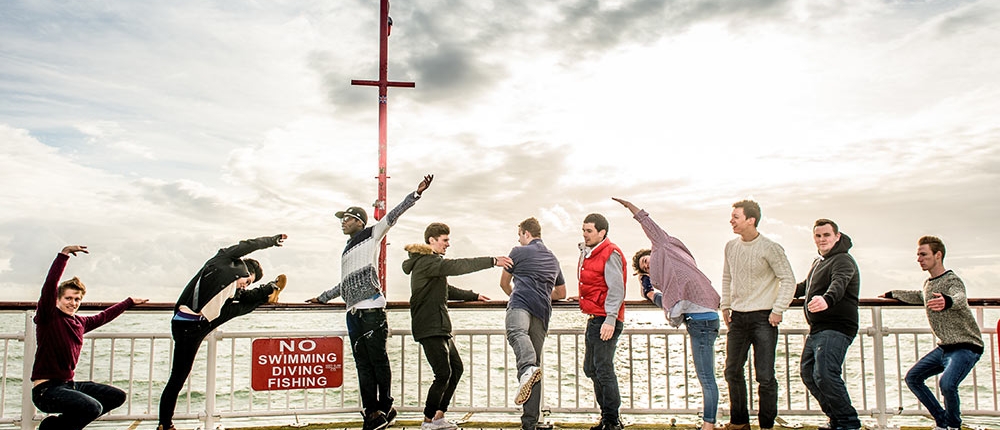
dancers on the pier with sport  and dance injuries in Bournemouth

Dealing with a dance injury that will not settle?

If longstanding or continual injuries from your dancing are getting in the way of your progress and enjoyment, come and talk things through. I offer a free 15-minute consultation, you can come in for a short no-obligation chat with no examination or treatment.

Book a free consultation

Or call for a chat on 01202 937568

Hypermobility and the dancer

Many dancers are naturally very flexible and a proportion have generalised joint hypermobility, meaning their joints move beyond the usual range. In dance this is often an asset, allowing the lines and extensions required, but it is double-edged.

A study of professional dancers saw hypermobility as a sign of talent or vulnerability, noting that alongside its advantages it was associated with more musculoskeletal complaints and lower measured fitness in some dancers.[4] I mention this because hypermobility shapes how I assess and manage a dancer. It is not something to be fixed or corrected and it is not a diagnosis in itself. It is important context: a hypermobile dancer in pain often does best with an emphasis on control and strength through range and knowing that someone is hypermobile, changes what I look for and how I apply what I find.

How chiropractic care may help dance injuries

For the soft tissue strains and joint problems that make up most dance injuries, chiropractic care may help you recover and return to dancing. In practice that usually means hands-on treatment of the affected joints and strained muscles to ease symptoms and restore movement, combined with a graded programme of exercises to rebuild the strength and control the work requires. Where the foot, ankle or lower back is the source, the approach follows what suits those regions which is why the assessment matters. For hypermobile dancers the emphasis shifts towards control and stability rather than yet more flexibility. Because dancers are usually keen to keep training, much of the work is about managing load sensibly so you can stay active while things settle. Every plan is shaped around the individual dancer, their discipline and what they are working towards.

Headshot of Leslie Budzynski DC, BCA registered Bournemouth Chiropractor at Bournemouth Chiropractic

Red flags: When to seek medical help for dance injuries

Most dance injuries settle with sensible management but some symptoms need a medical opinion first. See your GP promptly or seek urgent care through NHS 111, if you cannot bear weight after an acute injury, if a joint looks deformed or swells rapidly or if there is significant pain, numbness or pins and needles that does not ease. In an adolescent dancer, pain around a bony point that persists deserves checking, since the growing skeleton has vulnerable areas. Any low back pain accompanied by numbness around the back passage or saddle area of the pelvis or difficulty controlling the bladder or bowels, should be treated as an emergency. These are uncommon but when in doubt it is right to get checked.

Your first visit to Bournemouth Chiropractic

A chiropractic first visit begins with a thorough history of your dancing and routines, your present and past dance injuries, your training load and how the problem began. This is followed by an examination of the injured area and the regions around it, including an assessment of your general mobility. I will explain what I think is causing your injury and whether chiropractic care is a sensible option and if you would be better served by another professional, a podiatrist, physiotherapist or specialist.

Frequently Asked Questions

For the soft tissue and joint injuries that make up most dance problems, yes a chiropractor can help. My role is to work out exactly what is causing it. Treat the structures involved, guide the exercises that rebuild strength and control and recognise if anything needs a different professional. Because so many dance injuries involve the foot, ankle or lower back, getting the diagnosis right is the important first step.

No, hypermobility is common in dancers and is often an advantage for the flexibility the art form values. The aim when a hypermobile dancer has pain is usually to build control and strength through their range rather than to chase more flexibility. Hypermobility is something I assess and take into account and not something to be corrected or altered.

It depends entirely on the injury. Many minor problems can be worked around by modifying load while they settle and complete rest is often unnecessary. Others need a genuine pause. Dancing through sharp or worsening pain is rarely wise and the sensible step is to have it assessed so you know which degree of injury you are in.

Snapping hip is the click or snap many dancers feel at the front or side of the hip as the leg moves through certain positions. In most cases it is painless and harmless and caused by a tendon moving over a bony prominence. When it becomes painful it is worth assessing. There is more on the hip and pelvic pain hub.

Seek prompt medical care if you cannot bear weight after an injury, if a joint is visibly deformed or swells rapidly or if you have numbness or pins and needles that will not ease. For a young dancer, persistent pain over a bony point deserves checking. Occasionally, back pain can be associated with more serious symptoms. If you notice numbness around the saddle area or any new difficulty controlling your bladder or bowel, please seek urgent medical advice.

Whatever is behind your dance injury, come and find out

A niggle that flares in class or rehearsal is frustrating and most dancers want to know two things before anything else: is this something serious and is it going to stop me dancing. At a first full appointment I will take a full medical history, examine the injured area properly and look at the regions around it as well, including your general mobility because in dancers the foot, ankle, hip and lower back are often part of the same picture.

Dance injuries are a common reason active people book in to see me here in Bournemouth and Poole. Patients range from students working towards an exam to professional performers and from those who felt something go in a single movement to those who noticed an ache building over a run of rehearsals.

Where the problem is a soft tissue strain or a related mechanical issue, hands-on care alongside the control and strengthening work that carries the strongest evidence is a well-tolerated option worth considering and I will explain what I think will help in your case when I see you. Some problems need another opinion first. If that is what I find, I will help you get to the right person who can help you further.

Book an appointment online and you can choose what suits you: a first appointment, which is the full visit with a detailed history, examination and treatment where appropriate or a free 15 minute consultation, which is simply a no-obligation chat about your problem with no examination and no treatment. If you are not sure which you need please call the clinic.

Call, message or email, whatever is easiest and we will take it from there.

References

  1. Hincapié CA, Morton EJ, Cassidy JD. Musculoskeletal injuries and pain in dancers: a systematic review. Arch Phys Med Rehabil. 2008;89(9):1819-1829. doi:10.1016/j.apmr.2008.02.020
  2. Smith TO, Davies L, de Medici A, Hakim A, Haddad F, Macgregor A. Prevalence and profile of musculoskeletal injuries in ballet dancers: a systematic review and meta-analysis. Phys Ther Sport. 2016;19:50-56. doi:10.1016/j.ptsp.2015.12.007
  3. Allen N, Nevill A, Brooks J, Koutedakis Y, Wyon M. Ballet injuries: injury incidence and severity over 1 year. J Orthop Sports Phys Ther. 2012;42(9):781-790. doi:10.2519/jospt.2012.3893
  4. Scheper MC, de Vries JE, de Vos R, Verbunt J, Nollet F, Engelbert RHH. Generalized joint hypermobility in professional dancers: a sign of talent or vulnerability? Rheumatology (Oxford). 2013;52(4):651-658. doi:10.1093/rheumatology/kes220

Medical Disclaimer: The information on this website is for general informational purposes only and does not constitute medical advice, nor is it a substitute for diagnosis, treatment, or guidance from a qualified healthcare practitioner. If you have any health concern, please consult your GP or another appropriately qualified clinician. Chiropractic treatment isn’t suitable for everyone. Suitability is assessed at your initial consultation, with referral to another healthcare professional made where appropriate. Treatment outcomes vary between individuals, and no guarantee of results is made or implied.

Bournemouth Chiropractic
42 Branksome Hill Road, Bournemouth BH4 9LE
Tel: 01202 937568
Book an appointment